
A handful of dark web markets remain operational in 2026. Still, the landscape has shifted sharply since just two years ago: law enforcement has seized several long-dominant platforms, or they’ve vanished in exit scams, while newer markets have absorbed their displaced vendors and buyers. TorZon, Russian Market, STYX Market, Brian’s Club, and WeTheNorth currently account for most of the trading activity across stolen credentials, payment card data, and illicit goods. Meanwhile, former leaders like Abacus Market, AlphaBay, and Silk Road are defunct.
This churn matters beyond curiosity. When Abacus Market, which at its peak controlled an estimated 70% of Western-facing darknet Bitcoin transaction volume, disappeared in a suspected exit scam in mid-2025, its entire vendor base relocated to competing platforms within days. Data doesn’t disappear when a market goes offline; it migrates. That pattern is why tracking which markets are active, which have collapsed, and where their inventory resurfaces has become a core input for organizations assessing credential and data exposure, not just a matter of dark web trivia.
What Are Dark Web Markets?
Dark web markets are online marketplaces hosted on the Tor network that let buyers and sellers transact anonymously, typically for goods and services that can’t be sold on the open web, including stolen credentials, payment card data, drugs, and cybercrime tooling. They function much like conventional e-commerce platforms, with product listings, seller ratings, and checkout flows. Still, they’re only reachable through Tor, and payments run almost entirely on cryptocurrency rather than cards or bank transfers.
The category traces back to Silk Road, launched in 2011, which proved that anonymous commerce could operate at real scale by combining Bitcoin for payment, Tor for anonymity, and escrow for trust. Every major market since has followed that same basic template, even as individual platforms have come and gone through law enforcement seizures and exit scams.
How They Operate: Escrow, Reputation, and a Tor/Telegram Hybrid
Most dark web markets rely on three structural mechanisms to function despite having no legal recourse for disputes. Escrow systems hold a buyer’s payment until the transaction is confirmed, reducing the risk that a vendor takes payment without delivering. Vendor reputation scores, built from transaction history and buyer feedback, let repeat sellers establish credibility over time, which is why displaced vendors from a seized market can often move to a new platform and rebuild trust quickly rather than starting from zero. And increasingly, markets operate as a hybrid: the marketplace itself handles listings and payment, while Telegram channels handle announcements, dispute resolution, and, critically, migration instructions when a platform goes down.
That last piece is what makes today’s markets more resilient than earlier generations. No single point of failure exists anymore; when a market disappears, its community doesn’t scatter; it reorganizes around whichever surviving or newly launched platform absorbs the displaced vendors fastest.
Active Markets in 2026
Five platforms account for most of the trading volume across current dark web markets: TorZon, WeTheNorth, STYX Market, Russian Market, and Brian’s Club. Each has carved out a distinct niche, some general-purpose, others specialized around a single category, and together they’ve absorbed the vendor base left behind by larger markets that have since been seized or shut down voluntarily.
TorZon operates as a generalist marketplace spanning drugs, stolen data, and cybercrime tooling, and it’s grown into one of the more prominent English-language platforms as competitors have fallen away. WeTheNorth serves a regionally focused, primarily Canadian user base and has built a reputation around community moderation rather than sheer scale. STYX Market is fraud-centric by design, concentrating on stolen payment data, compromised account access, and cash-out services rather than general contraband. Russian Market functions as a high-volume, high-churn hub for compromised credentials and stealer logs, serving a global buyer base despite its name. Brian’s Club, active since roughly 2015, remains the longest-running carding marketplace still operating, specializing almost exclusively in stolen payment card data.
| Market | Active Since | Primary Focus |
|---|---|---|
| TorZon Market | 2022 | Drugs, stolen data, cybercrime tools |
| WeTheNorth | 2021 | Canada-focused drugs, fraud documents |
| STYX Market | 2023 | Financial fraud, cash-out services |
| Russian Market | 2019 | Stealer logs, credentials, RDP access |
| Brian’s Club | ~2015 | Stolen payment card data (carding) |
None of these platforms should be treated as permanently stable. Status in this ecosystem changes fast; a market that’s active today can go dark next month through an exit scam, a law enforcement seizure, or a voluntary shutdown, which is exactly the pattern the next section covers.
Disrupted/Defunct Markets
Most dark web markets that have shut down fell into one of three categories: seized by law enforcement, abandoned by their own operators in an exit scam, or closed voluntarily. The distinction matters for defenders because each closure type produces a different migration pattern for the data and vendors on the platform.
Law enforcement seizures are the most visible closures. AlphaBay, one of the largest markets of the 2010s, was taken down in 2017 in a joint FBI/Europol operation that simultaneously dismantled Hansa Market, catching thousands of displaced AlphaBay users mid-migration to their next destination. Kingdom Market followed a similar path in December 2023 and was seized in a coordinated operation involving agencies across five countries. BidenCash, a major carding platform, was shut down in June 2025 when U.S. authorities seized roughly 145 domains tied to its infrastructure; the marketplace, per the Department of Justice’s own seizure announcement, had served more than 117,000 customers and trafficked over 15 million stolen payment card numbers before it fell.
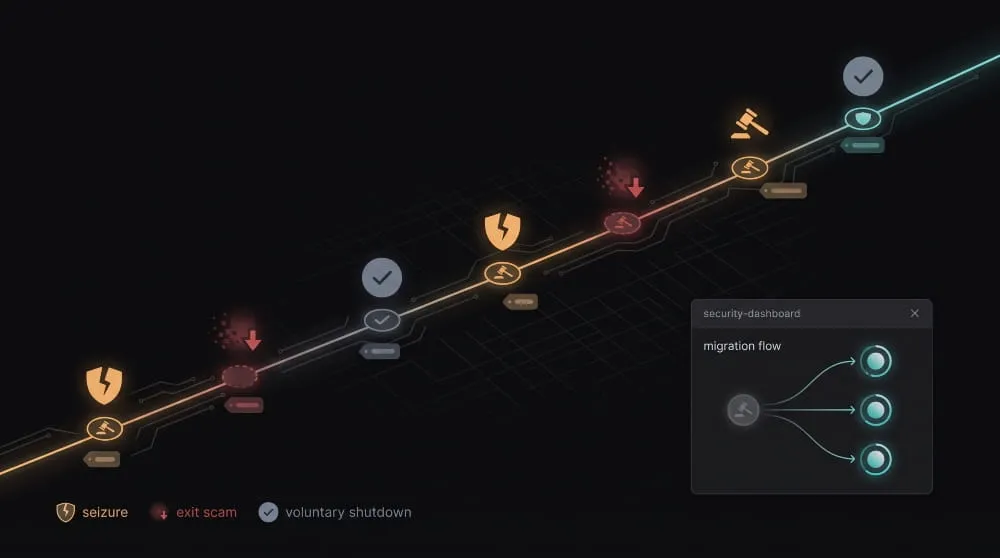
Exit scams follow a different pattern: rather than being taken down, operators disappear with funds held in escrow. Abacus Market, which at its peak held an estimated 70% share of Western-facing darknet Bitcoin transaction volume, went dark in mid-2025 with no seizure notice and no law enforcement announcement, just an unresponsive platform and inaccessible escrow funds. Threat intelligence analysts assessed it as a likely exit scam, and its entire vendor base scattered across competing markets within days. World Market and Tor2door both followed the same trajectory on a smaller scale, vanishing with buyer and vendor funds still in escrow.
Voluntary shutdowns are the rarest closure type. ToRReZ Market, one of the larger platforms in the ecosystem at the time, closed in December 2021 by deliberate operator decision rather than a raid or a scam; reporting at the time framed it as a clean exit.
Regardless of how a market closes, the underlying activity rarely stops. Vendors and buyers relocate to surviving platforms within days, which is why market shutdowns tend to matter less as endpoints and more as the starting point of the next migration wave, the subject of the next section.
What Gets Traded
Narcotics remain the highest-volume category by listing count across most general-purpose dark web markets. Still, for organizations tracking exposure risk, the more consequential categories are the ones that rarely make headlines: stolen credentials, payment data, and the access artifacts that feed directly into account takeover and ransomware.
Stolen credentials and stealer logs make up one of the largest and fastest-moving categories. These are username-and-password combinations, often bundled with session cookies and browser-stored data, harvested by infostealer malware and sold in bulk packages organized by geography, industry, or platform. A single stealer log bundle can contain hundreds of credential pairs spanning corporate email, VPN access, and cloud platforms. Because session cookies frequently bypass multi-factor authentication entirely, this category converts into real-world account compromise faster than almost anything else traded.
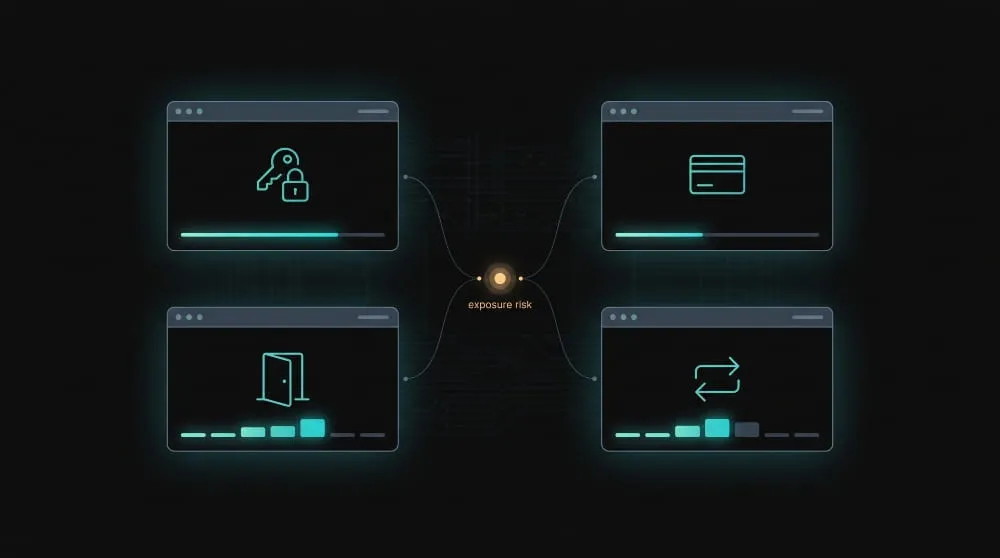
Payment card data is the second major pillar, sold as either “dumps” (track-style data used for in-person fraud) or “fullz” packages (card-not-present data bundled with identity details). This category built markets like Brian’s Club, and it typically originates from point-of-sale skimmers, e-commerce breaches, or third-party payment processor compromises rather than a direct attack on the affected business.
Initial-access listings are sold as standalone items, remote desktop protocol credentials, VPN access points, and compromised administrator accounts, priced according to network size and the level of access on offer. These listings function as a precursor to ransomware deployment and business email compromise, giving a buyer an established foothold without doing any of the initial intrusion work themselves.
Fraud-enablement services round out the picture: money laundering, fraudulent bank account opening, SIM swap facilitation, and cryptocurrency mixing. These downstream services convert stolen data and access into liquid criminal revenue. Their presence on a market often signals that the platform serves financially motivated actors rather than a general buyer base.
The common thread across all four categories is that an organization doesn’t need to have been directly breached to be affected; a credential harvested from an employee’s personal device or a card skimmed at a third-party vendor can put company and customer data into circulation without an attacker ever touching internal infrastructure.
Why Markets Keep Coming Back
Dark web markets keep reappearing after takedowns because the ecosystem has no single point of failure: when one platform disappears, the vendors, buyers, and data it hosted don’t vanish; they relocate. A market shutdown removes a storefront, not the underlying demand or the inventory that was for sale.
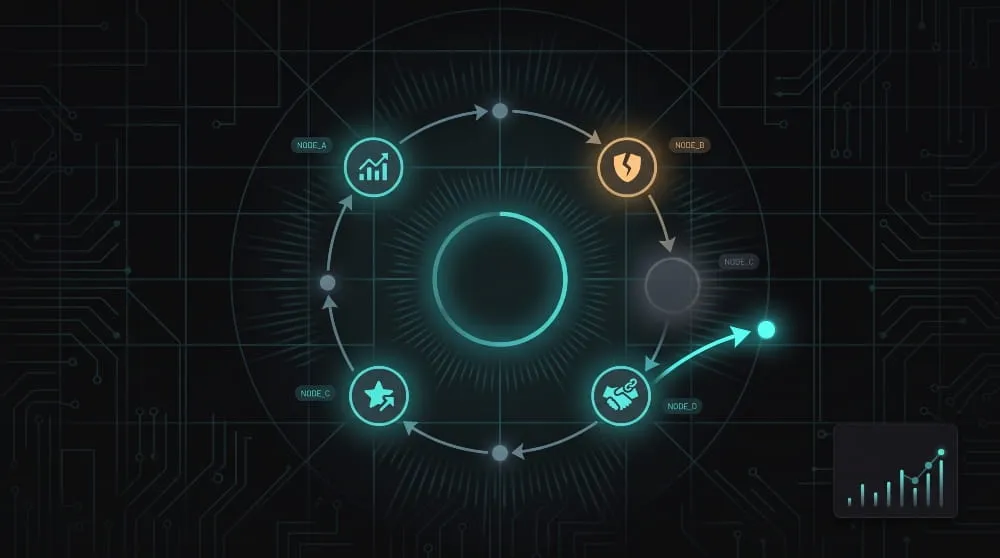
That migration pattern shows up consistently across every major closure. When AlphaBay was seized in 2017, Hansa Market absorbed its displaced users, only to fall in the same coordinated operation weeks later; Dream Market filled the resulting vacuum. When Archetyp Market was taken down in December 2024, TorZon and WeTheNorth both saw immediate spikes in vendor registrations. And when Abacus Market, then holding an estimated 70% share of Western darknet Bitcoin transaction volume, vanished in a suspected exit scam in mid-2025, its entire vendor base redistributed across TorZon, Russian Market, and STYX within days, marking the largest single migration event in the English-language darknet ecosystem since the AlphaBay/Hansa takedown eight years earlier.
Several structural factors sustain this cycle. The technical barrier to launching a new market is low; Tor hosting, escrow scripting, and vendor onboarding are well documented so that a replacement platform can reach operational status within weeks. Buyer demand also doesn’t pause during a transition; buyers look for alternatives immediately, giving any new platform a ready audience as soon as it establishes trust. And because vendor reputation is portable, built on PGP verification and community forums like Dread rather than tied to a single platform’s infrastructure, established sellers carry their credibility with them to whatever market absorbs the migration fastest.
The practical result is that market seizures function less as endpoints and more as reshuffles. Data exposed on a now-defunct market doesn’t become inaccessible when that platform disappears; it typically resurfaces on a competing market within days, which is why tracking exposure requires watching the ecosystem as a whole rather than any single marketplace.
What This Means for Your Organization
For most organizations, dark web markets feel abstract: no employee is browsing TorZon, no IT team is monitoring Russian Market listings, but that distance is misleading, because the data traded on these platforms very likely includes credentials, payment records, or access artifacts tied to your business whether or not anyone inside the company ever interacts with a market directly.
The connection runs through everyday compromise, not targeted attacks. Infostealer malware on an employee’s personal device harvests saved browser credentials and session cookies, including work logins, and routes them to markets like Russian Market within hours of infection. A breach at a SaaS vendor your team uses can expose API keys and employee emails that surface on TorZon within days. A phishing campaign aimed at your customers can produce harvested payment data that lands on Brian’s Club before your fraud team sees the first chargeback. In each case, the organization’s own infrastructure was never touched.
Exposure Doesn’t End When a Market Closes, Data Migrates
A common assumption is that a market seizure closes the exposure window for whatever data was listed there. It doesn’t. Law enforcement action typically disrupts a platform’s infrastructure, domains, servers, and accessibility, without destroying the datasets that were for sale on it. Vendors operating on a seized or collapsed market routinely relist their existing inventory on a surviving platform within days, often at discounted prices as they rebuild reputation with a new buyer base.
The practical implication is that a market’s closure changes where exposed data is accessible, not whether it’s accessible. If your organization’s credentials, customer records, or payment data appeared on a market before it shut down, the reasonable working assumption is that the same data remains in circulation on whatever platform absorbed that market’s vendors, which is why exposure assessments that stop tracking a data source the moment its original market disappears tend to miss the risk that actually persists.
How to Monitor Dark Web Markets, Without Visiting Them
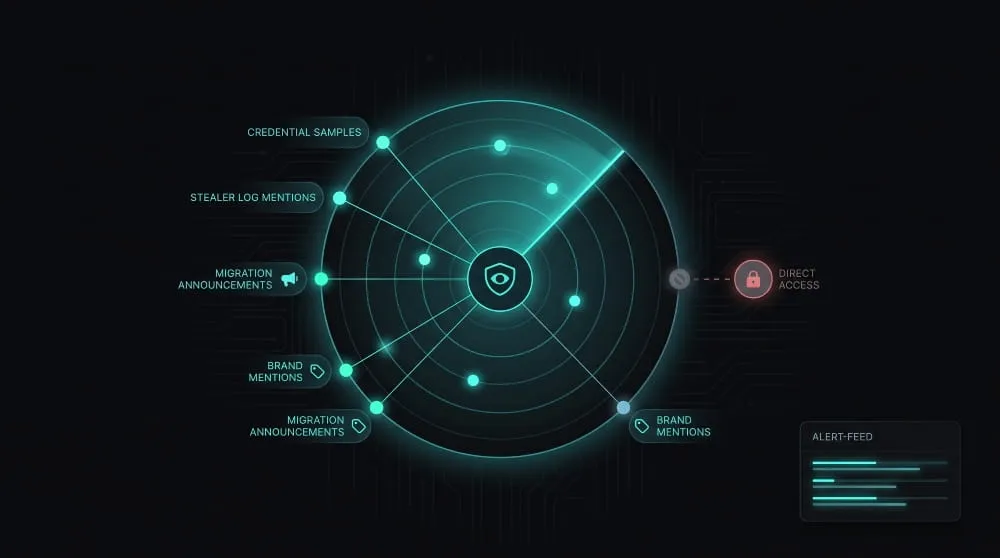
Monitoring dark web markets doesn’t require visiting them. For most organizations, it shouldn’t: direct access carries legal exposure, operational security risk, and produces less reliable intelligence than the alternative, tracking the signals these markets generate across the infrastructure surrounding them.
Signals to Track vs. Direct Access Risk
Teams that attempt to browse markets directly run into a practical problem beyond the legal and security risk: what they see is a single, incomplete snapshot. A market’s listings change constantly, onion addresses rotate, and manual searches return partial results even when a platform is fully operational. The more scalable approach is watching where activity around a market shows up elsewhere: vendors advertise on Tor-based forums like Dread, sample data gets posted to Telegram channels to attract buyers, and migration announcements reference exactly which datasets a vendor is carrying to a new platform after a shutdown.
Signals worth tracking include credential samples posted as proof-of-breach (often containing emails or hashed passwords tied to a domain), stealer log references naming a company or IP range, and vendor migration announcements following a market collapse. Brand mentions inside fraud channels, phishing kits, and forged documents referencing a company often circulate before the resulting attacks reach customers. None of these require touching a marketplace directly; they’re detectable across the forums, Telegram channels, and leak boards that surround it.
Correlating those signals across multiple sources, rather than watching a single forum or market, is what turns scattered mentions into an actionable finding, connecting a credential sample on one channel to a vendor alias seen on another, or a domain mention to a known stealer malware family. That’s the gap continuous dark web monitoring is built to close: tracking exposure across active markets and their surrounding ecosystem in real time, rather than relying on a point-in-time check that misses whatever gets listed the following week. If your organization hasn’t run a domain-level exposure check recently, Mispar can show what’s currently circulating tied to your credentials and customer data.
Frequently Asked Questions (FAQ’s)
Is the dark web illegal?
No. The dark web is a layer of the internet accessible only through tools like Tor, and using it isn’t illegal in most countries; it’s the same network journalists, researchers, and privacy-conscious users use for legitimate purposes. What’s illegal is specific activity conducted there, such as buying stolen data or controlled substances.
Is visiting a dark web market illegal?
This depends on jurisdiction and what you do once there. In most countries, simply loading a market’s page isn’t a prosecutable offense on its own, but browsing these platforms carries real risk even without transacting: exposure to malware, scams, and law enforcement monitoring of market traffic. For organizations, a safer, more reliable approach is to monitor the signals markets generate rather than access them directly.
How do dark web markets get shut down?
Three ways: law enforcement seizure, where authorities take down the platform’s infrastructure (as happened to AlphaBay in 2017 and BidenCash in 2025); an exit scam, where operators disappear with funds held in escrow (Abacus Market’s 2025 collapse fits this pattern); or a voluntary shutdown, where operators close the platform on their own terms, as ToRReZ did in 2021.
Does a market’s shutdown mean the stolen data is gone?
No. Seizures and exit scams disrupt a platform’s infrastructure, not the datasets that were listed for sale on it. Vendors typically relist their inventory on a surviving market within days, so data exposed on a now-defunct market should still be treated as circulating.
How can I check if my organization’s data is on a dark web market?
Direct searches across individual markets are unreliable and carry access risk. Dark web monitoring tools continuously track credential samples, stealer logs, and domain mentions across active markets and surrounding forums, catching exposure that a one-time manual check would miss.