
Yes, your SSN can end up on the dark web, and a free SSN lookup dark web tool is the fastest way to check whether that’s already happened. These lookups search known breach and leak databases for your Social Security number, giving you a direct answer instead of a guess because with SSNs, guessing isn’t good enough. Unlike a password, you can’t reset a Social Security number once it’s exposed, which is exactly why so many people search for a way to check the moment they see an unfamiliar credit inquiry, get a bank alert, or want to know where they stand.
The scale of exposure is larger than most people assume. The 2024 National Public Data breach alone exposed roughly 272 million unique Social Security numbers close to 80% of the U.S. population and it was just one incident among thousands of breaches that have leaked SSNs over the past several years. That doesn’t mean every SSN on that list has been actively misused, but it does mean a one-time lookup only shows what’s true right now, not what might surface next month from a breach that hasn’t been reported yet.
This guide covers what it actually means if your SSN turns up on the dark web, how to check it yourself, how to read an alert from your bank or credit monitor, and what to do next including where a free lookup stops and continuous monitoring has to take over.
What Does It Mean If Your SSN Is on the Dark Web?
If your Social Security number is on the dark web, it means the number itself has appeared in a breached database, a stolen data log, or a criminal marketplace listing somewhere outside the systems that were supposed to protect it. That doesn’t automatically mean someone has used it yet. Still, it does mean the number is now available to anyone willing to buy or trade for it, which is a meaningfully different situation than a password leak you can change.
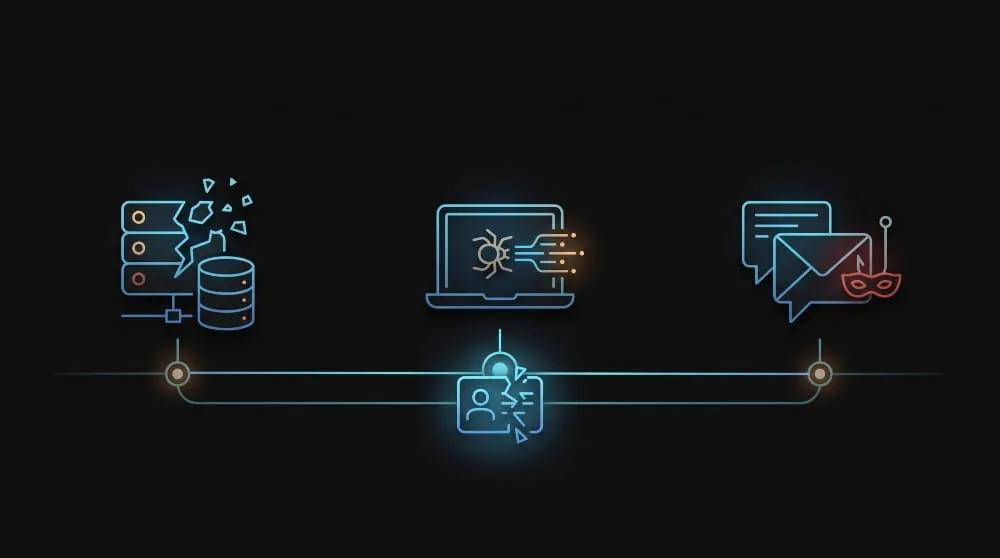
How SSNs End Up on the Dark Web
SSNs typically reach the dark web through one of three paths. The most common is a data breach at a company or institution that stored your number a healthcare provider, an employer, a government agency, or a data broker where attackers pull records in bulk and later post or sell them. The second is infostealer malware, which quietly harvests information (including SSNs saved in browsers, documents, or forms) directly from an infected device and feeds it into criminal logs that circulate continuously rather than in a single one-time dump. The third is phishing, where someone is tricked into handing over their SSN directly through a fake website, email, or phone call impersonating a legitimate organization. Each path lands the number in a different corner of the dark web, which is part of why a single lookup can miss exposures that a different source would catch.
What “Found,” “Compromised,” and “Leaked” Actually Mean in an Alert
These three words get used almost interchangeably in bank and credit-monitoring alerts, but they describe slightly different things. “Found” usually means your SSN matched an entry in a scanned data source; it’s a detection, not a judgment about how serious the exposure is. “Leaked” typically points to a specific breach or dump where the data became newly accessible, often with a rough idea of when and where it happened. “Compromised” is the broadest term and the one most alerts default to, covering everything from a years-old breach resurfacing to a fresh infostealer log which is why two people can get the same “compromised” alert wording for very different levels of actual risk. None of these words tell you whether the SSN has been used for fraud; they only tell you it’s been seen somewhere it shouldn’t be.
Is This Common? How Many SSNs Are Really Exposed
More common than most people expect. The Identity Theft Resource Center recorded 1,857 separate U.S. data breaches in 2024 alone that involved exposed Social Security numbers not 1,857 individual SSNs, but 1,857 distinct incidents, many affecting millions of people each. Because breaches compound over the years, someone’s SSN can appear in several exposure events without them knowing until an alert or a lookup surfaces it.
My SSN Was Found on the Dark Web: What to Do Now
If your SSN was found on the dark web, the right response is to lock down your credit, watch for fraud, and set up ongoing monitoring in that order, starting today rather than waiting to see if anything happens. A found SSN is a warning, not a foregone conclusion, and most of the damage it can cause is preventable if you act before someone else does.
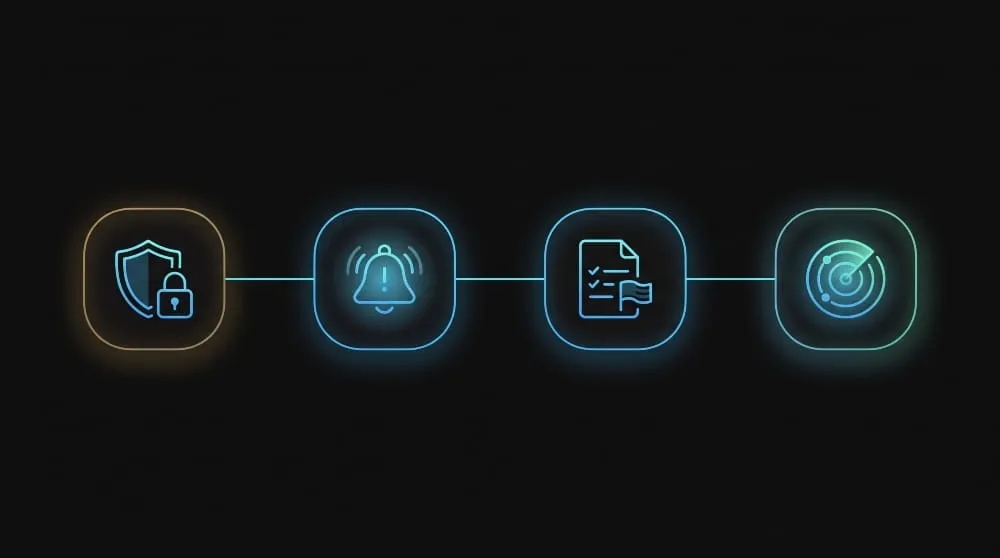
Immediate Steps: Credit Freeze, Fraud Alerts, and Monitoring
The single most effective step is a credit freeze with all three major bureaus Equifax, Experian, and TransUnion which is free and blocks new lenders from pulling your credit file at all, stopping most attempts to open fraudulent accounts in your name before they start. If a full freeze feels like too much friction, a fraud alert is a lighter-weight alternative that requires lenders to verify your identity before extending credit, though it offers less protection than a freeze and needs renewing more often. Alongside either option, check your existing bank and credit card accounts for unfamiliar transactions, and pull your free credit reports at annualcreditreport.com to look for accounts you didn’t open. From there, ongoing monitoring catches the next exposure instead of reacting to this one; a one-time check tells you what’s true today, while continuous monitoring tells you the moment something changes.
Who to Report It To
Report the exposure to the Federal Trade Commission at IdentityTheft.gov, which walks you through building a personalized recovery plan and, if fraud has already occurred, generates an official Identity Theft Report you can use with creditors and law enforcement. If you find evidence your SSN has actually been used for a fraudulent account, a fake tax return, or unemployment benefits filed in your name, report that specific misuse to the relevant institution directly (your bank, the IRS Identity Protection Specialized Unit, your state’s unemployment office) in addition to the FTC filing. A local police report isn’t always necessary, but some creditors and bureaus require one to remove fraudulent accounts, so it’s worth asking for a copy if you file one.
Long-Term Protection Habits
A found SSN doesn’t go away, so protection has to be ongoing, not a one-time cleanup. That means checking your credit reports regularly rather than just after an alert, keeping freezes in place except when you’re actually applying for credit, being deliberate about which forms and websites you hand your SSN to in the first place, and treating any unexpected tax, benefits, or account notice as worth investigating immediately rather than assuming it’s a mistake. The Identity Theft Resource Center’s count of 1,857 separate U.S. breaches involving SSNs in 2024 alone is a useful reminder here: a single all-clear check doesn’t protect against next year’s breach, which is why the people who fare best after an SSN exposure are usually the ones who keep watching instead of considering the issue closed once the initial scare passes.
Can You Remove Your SSN From the Dark Web?
No, once your Social Security number has been posted, sold, or copied into a criminal database, there’s no way to delete it from the dark web, and any service promising to “remove” it is selling something narrower than what the name implies. The dark web isn’t a single website with a delete button; it’s a scattered collection of marketplaces, forums, and private data dumps that get copied and re-shared the moment they’re posted, which means a number can never be fully clawed back once it’s out.
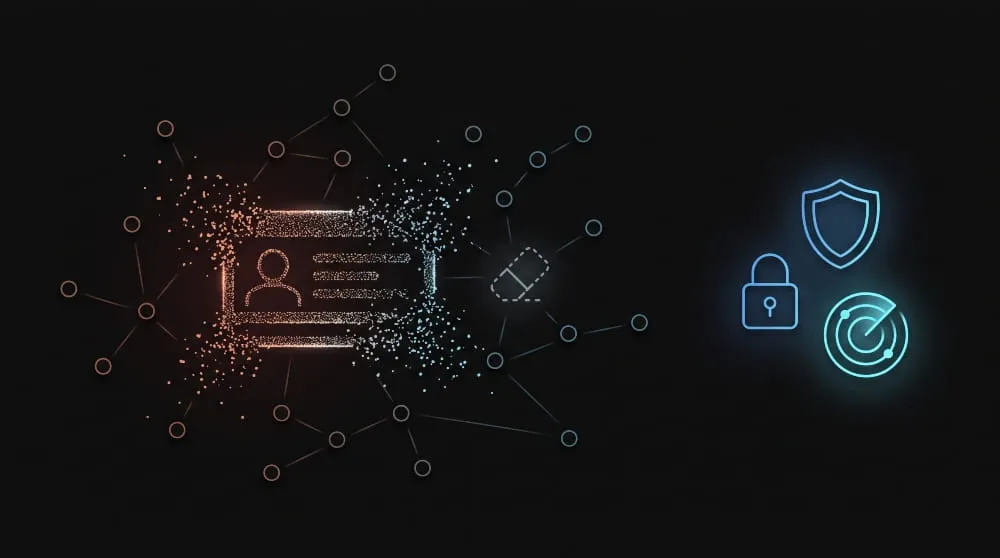
Why Removal Isn’t Really Possible (and What “Removal Services” Actually Do)
What removal services actually do is monitor for your information and, in some cases, submit takedown requests to specific sites or forums that host it, which can work for a single listing on a single platform, but does nothing about the copies that have already been downloaded, resold, or mirrored elsewhere by the time the request goes through. This is fundamentally different from something like a data broker opt-out, where a company controls its own database and can genuinely stop selling your information; dark web marketplaces have no such accountability, and most operate specifically to evade takedown requests. So while “SSN removal” is a real product category, it’s more accurately a monitoring-and-mitigation service than a true removal and any provider implying otherwise is overselling what’s technically achievable against a network designed to route around exactly this kind of request.
What You Can Control Instead
Since the exposure itself is permanent, the more useful question is what you can still control. The answer is everything downstream of the number: whether it can be used to open credit (a credit freeze addresses this directly), whether new exposures get noticed quickly (ongoing monitoring instead of a one-time check), and whether you’re handing the same SSN to more places than necessary going forward. This is the same logic that applies to the National Public Data breach, which exposed an estimated 272 million unique SSNs, roughly 80% of the U.S. population, where the sheer scale made individual “removal” a practical impossibility for almost everyone affected, and credit freezes plus monitoring became the realistic response instead. Treating the SSN as already-exposed and focusing energy on detection and account protection tends to produce far better outcomes than chasing a removal that the structure of the dark web makes very difficult to deliver.
How Much Is a Stolen SSN Worth? (And Why It Matters)
A stolen Social Security number typically sells for just $1 to $6 on dark web marketplaces. This price surprises most people, since it’s far lower than what a stolen credit card or full identity package fetches. That low price isn’t a sign the number is harmless; it’s a sign of supply. SSNs don’t expire and can’t be reissued like a card number, so criminals treat them as a long-term asset rather than a one-time payout, which keeps the per-record price low even as the total market stays large.
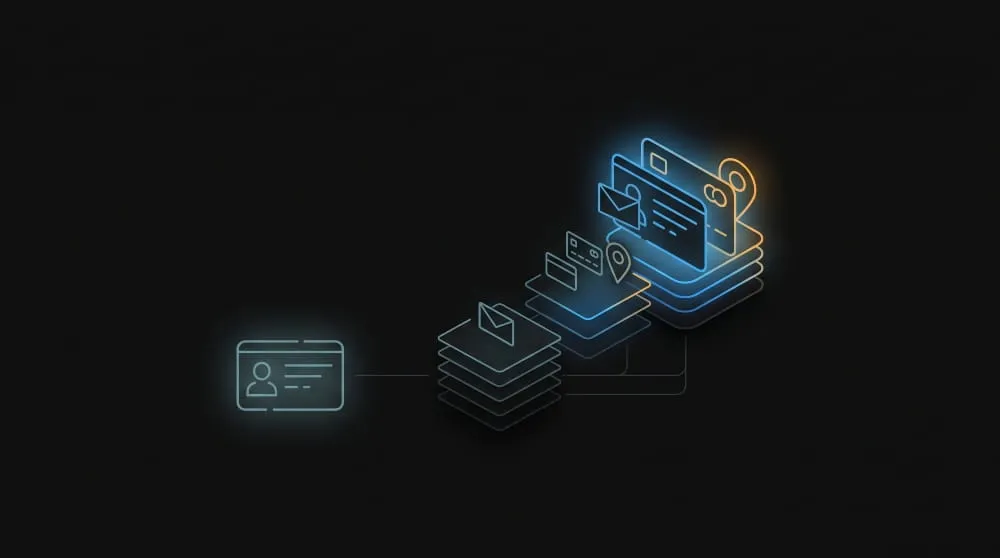
The Dark Web SSN Economy
On its own, a bare SSN sits at the low end of the dark web’s pricing structure precisely because it’s abundant and incomplete; a buyer can’t do much with nine digits alone. Prices climb sharply once that number is bundled with other identifying details: a full “fullz” package (SSN plus name, date of birth, address, and often a bank or card number) can sell for anywhere from $10 to several hundred dollars, and packages tied to good credit or a clean identity history command a premium over one flagged as already used in fraud. This tiered pricing is part of why a single SSN alert doesn’t tell you much about the value or intent behind the exposure; the same $2 listing could sit unused for years or get bundled into a much more dangerous package within days.
Why Your SSN Alone Is Rarely the Whole Risk
The low individual price of an SSN is exactly why it’s dangerous to treat in isolation: criminals rarely use one on its own, and the real threat shows up when it’s combined with other exposed data a leaked email and password, a name and address from a different breach, a phone number from a data broker to build a complete profile capable of opening credit, filing a fraudulent tax return, or passing identity verification checks. This is also why the National Public Data breach was treated as such a significant event despite “only” exposing SSNs and basic identifying information. At roughly 272 million unique numbers, it gave criminals the missing puzzle piece to pair with data from countless smaller breaches already in circulation. A one-time SSN lookup can tell you whether your number specifically has surfaced. Still, it can’t tell you what else of yours might already be sitting alongside it, which is the gap continuous monitoring is built to close.
Frequently Asked Questions (FAQ)
Is everyone’s SSN on the dark web?
Not everyone’s, but far more than most people assume. The 2024 National Public Data breach alone exposed roughly 272 million unique SSNs, close to 80% of the U.S. population. A free lookup is the only way to know whether yours is specifically among them rather than guessing based on the odds.
What if my SSN is on the dark web with the wrong name attached?
This is common and usually means your number was bundled with someone else’s stolen details, or a typo occurred somewhere in the breach data itself. Your SSN is still at risk, so the same steps apply: a credit freeze, fraud alerts, and monitoring, regardless of whose name is attached to it.
How is this different from a data breach notification?
A breach notification tells you a specific company lost your data in a specific incident; a dark web finding tells you your SSN turned up in a scan of criminal sources, which could stem from that breach, a different one, or several combined. The dark web result is broader but vaguer; it confirms exposure without always pointing to the source.
Any of these situations point to the same conclusion: a single check answers today’s question, but new breaches surface constantly, so continuous monitoring keeps you ahead of the next one instead of finding out after the fact.