
Yes, phone numbers do end up on the dark web, almost always as part of a much larger batch of stolen data rather than leaked on their own. If yours was one of them, you were probably tipped off by a bank text, an identity-monitoring app, or a we found your phone number on the dark web alert, and a dark web phone number lookup that checks known breach and leak sources is the fastest way to confirm it yourself instead of guessing.
This isn’t a fringe scenario. In May 2025, hackers leaked more than 86 million AT&T customer records, full names, phone numbers, and tens of millions of Social Security numbers among them, onto a Russian cybercrime forum, and breaches like it hit telecoms, retailers, and apps that store your number on a near-constant basis. A phone number alone is less damaging than a leaked SSN, but it’s the entry point for a specific set of attacks: SIM-swap fraud, smishing texts, and spoofed calls that already sound like they know who you are.
This guide covers what it means if your phone number is on the dark web, how to check it, what to do the moment you find it there, whether it can really be removed, and where a one-time lookup ends and continuous monitoring begins.
What It Means If Your Phone Number Is on the Dark Web
If your phone number is on the dark web, it means the number itself has surfaced somewhere outside the legitimate systems it was originally given to, a breached company database, a leaked data broker file, or a criminal marketplace listing. That’s different from your number simply being public or searchable; it means the number is now sitting in a place built to buy, trade, and reuse stolen data. On its own, a phone number can’t be hacked or drained the way an account can, but it’s still a functioning piece of your identity, and once it’s circulating on the dark web, you no longer control who has it or what they do with it next.
How Phone Numbers End Up There
Phone numbers usually reach the dark web through one of three routes, and each one says something different about how exposed you actually are. The most common is a data broker leak or resale: people-search sites and marketing data firms collect and resell phone numbers as a normal part of their business, and that data eventually gets scraped, breached, or dumped onto criminal forums regardless of whether you ever handed your number to a hacker directly. One recent audit found over 140 separate data broker sites listing a single person’s phone number. The second is a company data breach, where an app, retailer, or service you gave your number to gets compromised and your number leaves along with everyone else’s in bulk. The third is infostealer malware, which pulls saved contact and account information directly off an infected device, your own or someone else’s who had your number stored, and feeds it into logs that traffickers buy and sell continuously rather than in a single one-time dump. Because these paths are so different, the same phone number can end up exposed more than once, through more than one route, without any single event being the breach that caused it.
Signs & Alerts: How People Usually Find Out
Most people don’t go looking for their phone number on the dark web; they find out because a bank, a credit monitoring app, or an identity-protection service texts or emails them first, often with wording like we found your phone number on the dark web or a flagged security alert inside an app they already use. Fewer people stumble onto it themselves, usually after a spike in scam calls or texts makes them suspicious enough to check.
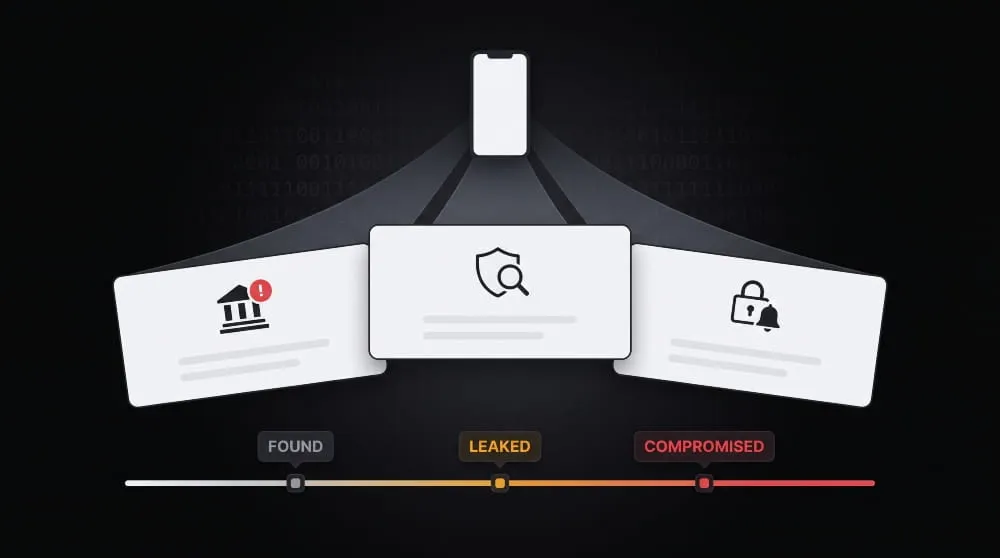
Reading a Found, Compromised, or Leaked Alert
These words show up interchangeably in alerts, but they don’t all mean the same level of risk. Found is the most neutral; it just means your number matched an entry in a scanned breach or leak source, with no judgment about severity attached. Leaked usually points to a specific, identifiable incident: a named breach or a dump that became newly accessible, often with a rough date attached. Compromised is the vaguest and most commonly defaulted-to term, covering everything from a years-old exposure resurfacing in a new database to a phone number pulled fresh off an infected device last week, which is why two people can get an identical compromised alert for very different actual levels of risk. None of these words alone tell you whether the number has been used yet; they only confirm it’s been seen somewhere it shouldn’t be.
That gap between detection and actual harm is where most of the damage happens. The FTC recorded $470 million in reported smishing losses in 2024 alone, more than five times what was reported in 2020, and a leaked phone number is frequently the first ingredient scammers need to make that first text look legitimate. So while the alert itself isn’t an emergency, treating it the same as ignoring it is the mistake that turns a flagged number into an actual loss.
My Phone Number Was Found: What to Do Now
If your phone number was found on the dark web, the right response is to lock down carrier access first, then watch for follow-on scam attempts, then report it, in that order, starting today rather than waiting to see if anything happens. A phone number on its own can’t drain an account, but it’s the first domino in several attacks that can, so speed matters more here than it might feel like it should.
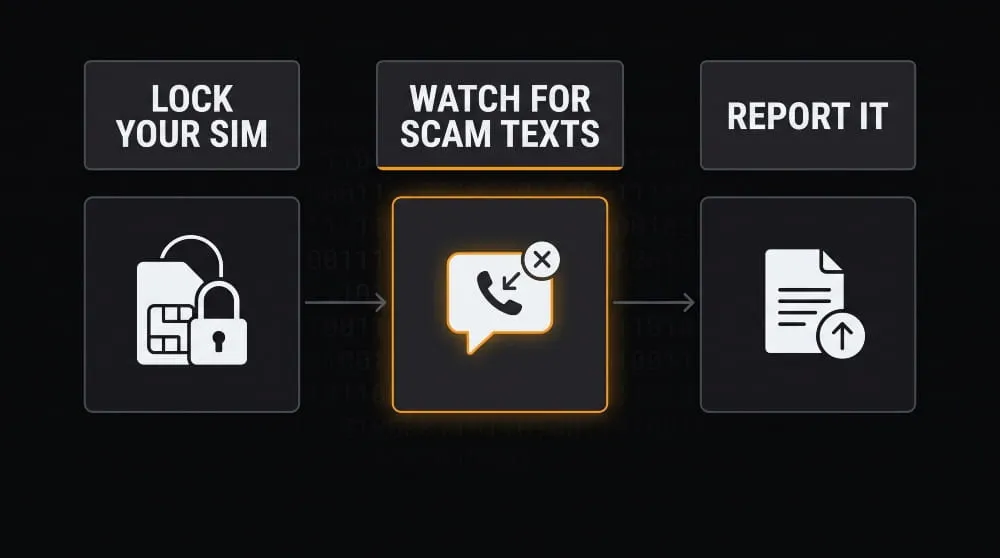
SIM-Swap & Port-Out Protection (carrier PIN/lock)
The single most important step is locking your account with your carrier so no one can transfer your number to a new SIM card without your explicit approval. This is usually called a port-out PIN, number lock, or porting freeze, and every major U.S. carrier offers some version of it. However, few turn it on by default. Set this up by calling your carrier directly or through their account security settings, and choose a PIN that isn’t your birthday, address, or anything else that shows up in the same breach data your phone number came from. This step matters because a SIM swap hands an attacker your text messages, including the one-time codes that reset your email, bank, and crypto accounts. The FBI’s Internet Crime Complaint Center logged 982 reported SIM-swap complaints and roughly $26 million in direct losses in 2024 alone. In nearly all of those cases, the attacker started with nothing more than the victim’s phone number and a convincing enough story to talk a carrier rep into approving the transfer.
Smishing & Robocall Risk
The more immediate, lower-stakes consequence is a spike in scam texts and calls, since a phone number that’s circulating on the dark web tends to get added to multiple spam-texting and robocall lists at once, sometimes within days of showing up in a leak. These messages are often personalized with your name, a real company you use, or details pulled from the same breach your number came from, which is what makes them convincing enough to click. Treat any unexpected text asking you to click a link, confirm an account, or call back a number as suspicious by default, and don’t reply STOP to numbers you don’t recognize; replying confirms the number is active, which makes it more valuable to resell.
Report It (carrier, FTC)
Report the exposure to your carrier first, since they’re the only party who can lock your account or investigate an active port-out attempt in real time. Separately, file a report with the FTC at ReportFraud.ftc.gov, which logs the exposure and, if you’ve already lost money or noticed fraudulent activity, routes you toward the right next steps for your situation. If you’ve received specific scam texts or calls using your number, forwarding them to 7726 (SPAM) helps your carrier and regulators track the campaign, even though it won’t undo the exposure itself.
Can You Remove a Phone Number From the Dark Web?
No, once a phone number has been posted, sold, or copied into a criminal database, there’s no way to delete it from the dark web, and any service promising outright removal is selling something narrower than the name implies. The dark web isn’t a single site with a delete button; it’s a scattered mix of marketplaces, forums, and private data dumps that get copied and re-shared the moment they’re posted, so you can’t fully claw back a number once it’s out there.
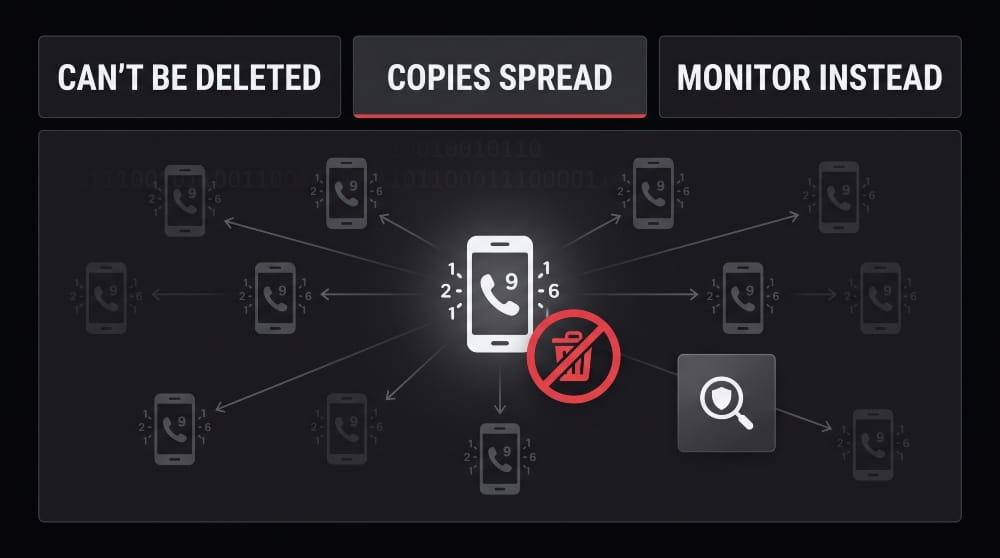
What Removal Services Actually Do
What these services actually do is monitor for your number and, in some cases, file takedown requests with specific sites or forums hosting it, which can work for a single listing on a single platform, but does nothing about copies that have already been downloaded, resold, or mirrored elsewhere by the time the request lands. That’s fundamentally different from something like a data broker opt-out, where a legitimate company controls its own database and can genuinely stop selling your number going forward; dark web marketplaces have no such accountability, and most are built specifically to route around takedown requests. When a breach hits the scale of the 2025 AT&T leak, which put more than 86 million customer records, including phone numbers, into circulation, removal stops being a realistic goal for any individual number, and monitoring becomes the only practical response.
What You Can Control Instead
Since the exposure itself is permanent, the more useful question is what you can still influence: whether your number can be used to hijack your accounts (a carrier PIN lock addresses this directly), whether new exposures get caught quickly (ongoing monitoring instead of a one-off check), and whether you keep handing the same number to more places than necessary going forward. Treating the number as already exposed and focusing on detection and account protection tends to produce far better outcomes than chasing a removal that the dark web’s structure makes very difficult to deliver.
Other IDs Worth Watching
Phone numbers and Social Security numbers aren’t the only personal identifiers that turn up in the same breach dumps and infostealer logs; driver’s license numbers show up alongside them often enough to be worth checking for, since many of the same data broker leaks, retailer breaches, and phishing sites that collect a phone number ask for (or store) a driver’s license number too. A leaked driver’s license number carries its own risk: it’s commonly used for identity verification at banks, rental car counters, and government offices, making it useful to a fraudster trying to open an account or pass a proof-of-identity check in your name. If you’re already checking for your phone number, it’s worth running the same lookup against your driver’s license number and treating any hit the same way, locking down the accounts it could unlock rather than assuming a smaller, less-talked-about ID is lower risk.
A One-Time Check Only Tells You About Today
A dark web phone number lookup answers one question: is your number exposed right now? It can’t tell you what shows up next month, because new breaches surface constantly and each one is a fresh chance for your number to appear somewhere a one-time check already missed. In 2025 alone, researchers tracked more than 300 million leaked records across nearly 800 separate breaches, a pace that makes a single all-clear result feel reassuring for far shorter than most people assume.
That gap is exactly what continuous monitoring is built to close. Instead of checking once and hoping the answer holds, ongoing monitoring watches breach sources, infostealer logs, and dark web listings on an ongoing basis and alerts you the moment your number turns up, not weeks or months after the fact, when a scammer may have already had time to use it. A one-time lookup is a reasonable first step. Staying ahead of the next exposure, rather than finding out about it after the damage is done, is what actually protects you.
Frequently Asked Questions (FAQ)
Is everyone’s phone number on the dark web?
Not everyone’s, but it’s common enough that you shouldn’t assume you’re the exception. Major breaches like the 2025 AT&T leak alone put more than 86 million phone numbers into circulation, and that’s just one incident among many. A lookup is the only way to know whether yours is specifically among them rather than guessing.
Why is my phone number on the dark web if I never gave it out to hackers?
You likely never gave it to a hacker directly; data brokers, retailers, and apps you did trust with your number can still get breached, resold, or scraped without your knowledge. The number doesn’t have to leak from you personally to end up exposed.
How is this different from just getting more spam calls?
Spam calls alone don’t confirm your number is on the dark web; they can come from random dialing. A dark web finding is more specific: it means your number matched an actual breach or leak source, which is a stronger signal that your data is genuinely circulating rather than just being guessed at.